Northwest Argentina · 10 days
Quebrada de Humahuaca and the Calchaquí Valleys
Purmamarca · Iruya · Salinas Grandes · San Antonio de los Cobres · Salta · Cachi · Cafayate
A 10-day circuit through northern Argentina: the Quebrada de Humahuaca, a World Heritage Site; Iruya; the Mirador del Hornocal viewpoint; and the Salinas Grandes, with a crossing of the Puna to San Antonio de los Cobres and the ruins of Santa Rosa de Tastil. From Salta, the Cuesta del Obispo leads to Cachi and Route 40 to Cafayate and its wineries, with the return journey through the Quebrada de las Conchas.
Highlights
- Cerro de los Siete Colores and the Quebrada de Humahuaca
- Iruya, a magical village beyond the Abra del Cóndor
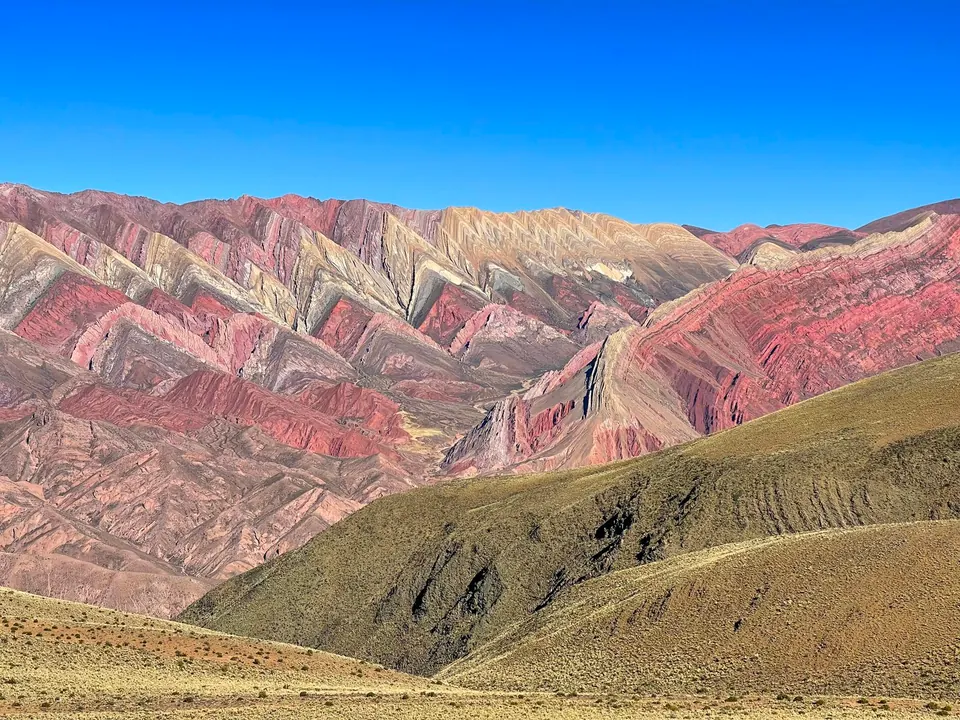
- Mirador del Hornocal, the Serranía de los 14 Colores
- Salinas Grandes and the crossing of the Puna
- Pre-Inca ruins of Santa Rosa de Tastil
- Torrontés tasting at Cafayate wineries
Day-by-day itinerary
Day 1 · 96 km
San Salvador de Jujuy · Purmamarca
Meet and greet at Gobernador Horacio Guzmán International Airport in the province of Jujuy and transfer to Purmamarca. Rooms are available between 14:00 and 15:00, depending on the selected hotel. Accommodation and the rest of the day at leisure. Overnight in Purmamarca.
Day 2 · 160 km
Purmamarca · Quebrada de Humahuaca · Iruya
Breakfast. The Quebrada de Humahuaca, one of the few places declared a UNESCO World Heritage Site in the Cultural Landscape category, stands out both for its extraordinary natural setting and for the imprint that people have left on the environment throughout history. We begin in Purmamarca, home to the famous Cerro de los Siete Colores (Hill of Seven Colors). Later we continue to the town of Tilcara. The route then heads to Huacalera, where we cross the Tropic of Capricorn, an area from which travelers can admire the colors of the hill known as La Pollera de la Colla. In Uquía we visit the historic church, which houses the celebrated paintings of the Ángeles Arcabuceros (Arquebusier Angels), a valuable legacy of the Cuzco School. We then reach Humahuaca, where we will visit its cathedral and the Independence Monument, better known as the Monumento al Indio. After lunch we will begin the climb along the mountain road toward Iturbe and the Abra del Cóndor pass (3,900 m above sea level), with breathtaking views of the altiplano. Finally, we arrive in the magical village of Iruya, nestled among mountains and gorges, a place of pre-Hispanic origin whose cobblestone streets preserve the essence of Argentina's deep north. Accommodation at the selected hotel. Dinner. Overnight in Iruya.
Day 3 · 190 km
Iruya · Serranía del Hornocal · Purmamarca
Breakfast. Afterward, we will head back along the same road to the town of Humahuaca. From there, the journey continues east on RP 73, a gravel road that passes through the farming valleys of Coctaca and climbs steeply: in a stretch of just 25 km it rises from 3,000 to 4,350 m above sea level. We will reach the spectacular Mirador del Hornocal viewpoint, which offers a unique panorama of the multicolored mountain known as the Serranía de los 14 Colores (Hill of 14 Colors). After the visit, we will return to Humahuaca, where we will have free time for lunch. We will then continue to Purmamarca on RN 9, the same road we took on the way there. Accommodation at the selected hotel. Overnight in Purmamarca.
Day 4 · 160 km
Purmamarca · Salinas Grandes · San Antonio de los Cobres
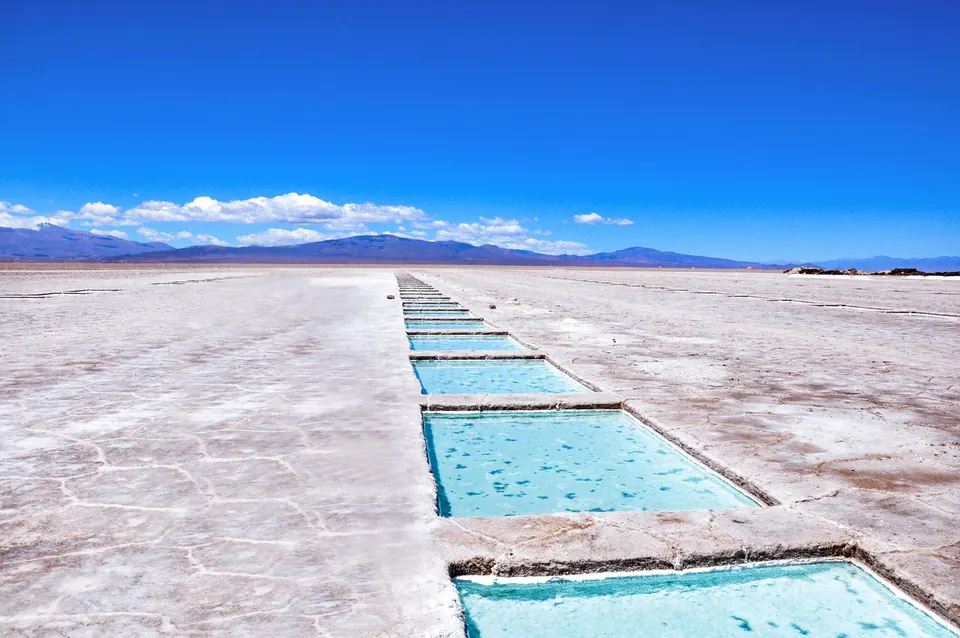
Breakfast. Departure for the Salinas Grandes via the Cuesta de Lipán, a winding paved road that climbs to 4,170 m above sea level at Alto El Morado. From here the road descends to the Puna, a vast high-altitude plain lying at around 3,500 m above sea level. The Salinas Grandes, recently included among the Seven Natural Wonders of Argentina, are a place of singular beauty, their white surface contrasting with the deep blue sky. Here travelers can walk around and observe the long pools that form after the salt is extracted, both for consumption and for the work of local artisans, who carve sculptures from the same material. We then continue along RN 40, a gravel road, to San Antonio de los Cobres, which lies at 3,700 m above sea level, making it the gateway to the Puna. Arrival around midday and accommodation at the selected hotel. This mining town preserves its Andean identity, its adobe and stone buildings, and the warmth of its people. It is also the starting point for many unique experiences in the Puna, including the iconic Tren a las Nubes (Train to the Clouds) and excursions to the La Polvorilla Viaduct, one of the highest railway structures in the world. Dinner. Overnight in San Antonio de los Cobres.
Day 5 · 170 km
San Antonio de los Cobres · Santa Rosa de Tastil · Salta
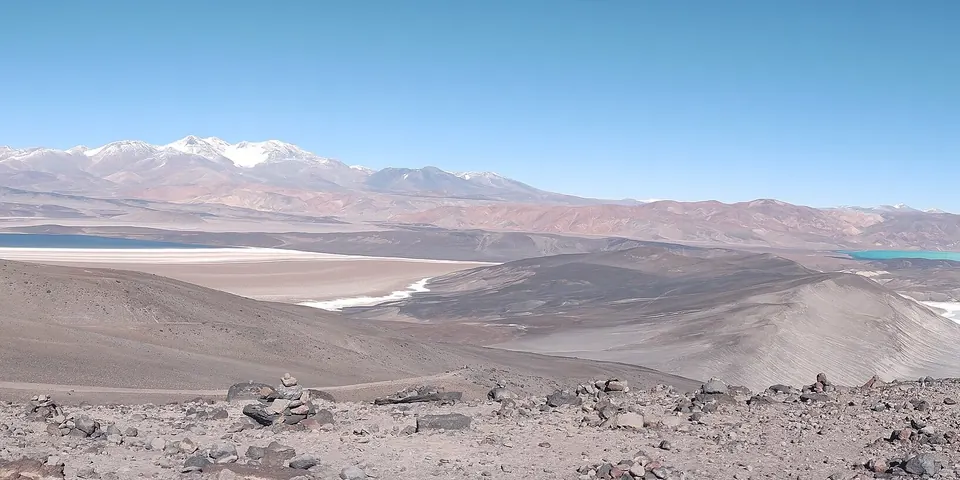
Breakfast. Afterward, we set off for Salta on RN 51. We will cross the Abra Blanca pass at 4,080 m above sea level, one of the highest points of the route, with panoramic views of the Puna and its multicolored mountains. We then begin the descent via the Cuesta de Muñano and later pass Finca La Encrucijada, a historic rural settlement. One of the highlights of the day is the visit to the pre-Inca ruins of Santa Rosa de Tastil, considered one of the most important cities of the Atacameño civilization. This ancient settlement, which at its peak was home to more than 2,000 inhabitants before the Inca expansion, still preserves the original layout of its streets, dwellings, and burial sites, offering a window into the pre-Columbian past of northwestern Argentina. We will continue our journey partly following the route of the legendary Tren a las Nubes. Along the way, travelers can appreciate some of the railway's most remarkable feats, such as the El Toro Viaduct and the famous zigzags of El Alisal and Chorrillo, true masterpieces of railway engineering that allow the train to gain altitude among towering mountains. On this stretch we will pass through places full of history and charm, such as Alfarcito, Ingeniero Maury, El Gólgota, and El Candado, where local residents keep their ancestral customs alive. Alfarcito, in particular, is known for its high-mountain school and its community project, which reflects the strength and spirit of solidarity of the Andean people. Arrival in Salta in the afternoon. Accommodation at the selected hotel. Overnight in Salta.
Day 6
Salta
Breakfast. We then begin our tour of the city of Salta, a 3-hour experience that takes in both the heart of the city and its surroundings. We start at the Cathedral Basilica of Salta, built in 1855, where the remains of General Martín Miguel de Güemes, a hero of Argentine independence, are laid to rest. A few steps away, the Historical Museum of the North, housed in the old Cabildo, offers a detailed look at Salta's history through its exhibitions of sacred art and rooms devoted to the old families that shaped the city's development. The tour continues with the Minor Basilica of San Francisco, famous for its imposing facade and unique architectural details, and the Carmelite Convent of San Bernardo, a reflection of the city's spirituality and religious history. We then head to the Güemes Monument, a tribute to the general's courage and leadership in defending the region during the War of Independence.
To see the city from another perspective, we will go up Cerro San Bernardo, which offers an impressive panoramic view of both the historic center and the landscapes surrounding Salta. On the way down, we pass the 20 de Febrero Monument, site of the historic Battle of Salta, a milestone in national history. The tour also includes a visit to the summer retreat of San Lorenzo, on the outskirts of the city, known for its subtropical microclimate, green spaces, and natural setting. We finish with a visit to the Mercado Artesanal crafts market, which displays handicrafts with the province's certification of origin, an opportunity to admire and purchase unique products that reflect Salta's cultural identity. Return to the hotel. Accommodation and afternoon at leisure. Overnight in Salta.
Day 7 · 165 km
Salta · Valle de Lerma · Cuesta del Obispo · Cachi
Breakfast. Leaving the city of Salta, the route crosses the Valle de Lerma, passing through El Carril and Chicoana, before entering the Quebrada de los Laureles and the Quebrada de Escoipe, surrounded by lush vegetation. The climb up the Cuesta del Obispo offers a unique natural spectacle: curves winding their way through the mountains, panoramic views of the Valle Encantado, and small farms growing corn and fruit trees. The highest point of the route, La Piedra del Molino (3,384 m above sea level), marks the entrance to Los Cardones National Park, which we cross along the legendary Recta del Tin-Tin, an ancient Inca road. On arriving in Cachi, we will be greeted by a majestic view of the Nevado de Cachi. The visit covers the town's main attractions, such as the Pío Pablo Díaz Archaeological Museum, home to a valuable collection of pre-Columbian pieces, and the San José Church, declared a National Historic Monument for its architecture and its altar carved from cactus wood. Accommodation at the selected hotel. Afternoon at leisure. Overnight in Cachi.
Day 8 · 160 km
Cachi · Seclantás · Molinos · Cafayate
Breakfast. The route continues south along the iconic Route 40, following the Calchaquí River and passing through villages full of history and charm. First comes Seclantás, the cradle of handloom weaving and the Salta poncho. Continuing along RN 40, we reach Molinos, home to the Hacienda de Molinos, now a hotel, which was once the estate of Nicolás Isasmendi, the last royalist governor of the Intendancy of Salta del Tucumán. Shortly after Angastaco, the Quebrada de las Flechas comes as a surprise: a completely different landscape where the wind has carved thousands of arrow-like formations along the sides of the road, pointing skyward. Payogastilla, San Carlos, and Animaná are the next villages along the way. The vineyards on both sides of the road tell us that we are nearing our final destination, the town of Cafayate. Set at 1,660 m above sea level, it stands out for its production of Torrontés wine, thanks to an exquisite combination of temperature and humidity that is ideal for growing this grape, with its sweet, deep, and fruity flavor. Arrival around midday, the perfect time for a tasting followed by lunch at one of the renowned wineries. Accommodation at the selected hotel. Overnight in Cafayate.
Day 9 · 190 km
Cafayate · Quebrada de las Conchas · Salta
Breakfast. We set off on RN 68 through the Quebrada de las Conchas, where wind and water have carved truly curious and unusual shapes over several centuries. The gorge reveals highly diverse geology and an incredible landscape. We will stop at the most outstanding spots: Garganta del Diablo, El Anfiteatro, El Obelisco, El Sapo, and Los Castillos, taking gentle walks among the geological formations to appreciate the magnitude of the place. Finally, we enter the Valle de Lerma and, a few kilometers before reaching the city of Salta, pass through rural towns such as El Carril, La Merced, and Cerrillos, all devoted to farming, mainly the production of tobacco, beans, and spices. Arrival in Salta and accommodation at the selected hotel. Overnight in Salta.
Day 10
Salta
Breakfast. Transfer to the airport. End of services.
Sample itinerary. Included services, hotel category and meals are detailed in the quotation.