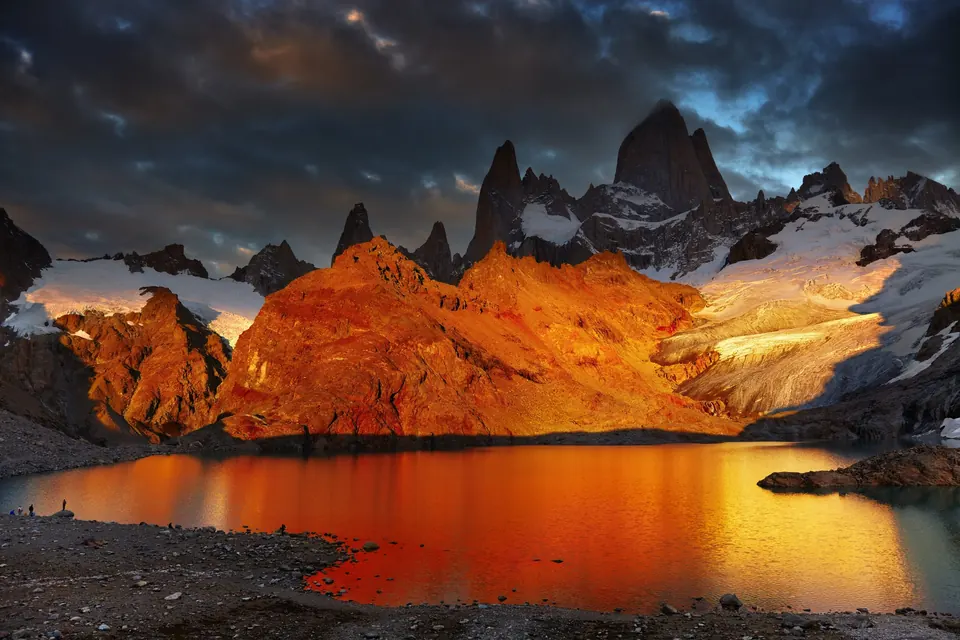
Photo: Cristian imagine · CC BY-SA 4.0
Patagonia · 12 days
Undiscovered Patagonia
Puerto Deseado · Isla Pingüino · Lago Posadas · Cueva de las Manos · Caleta Tortel · Marble Caves · Coyhaique
Twelve days through Argentine and Chilean Patagonia, from the Atlantic coast of Santa Cruz Province to the Carretera Austral. The program combines the Jaramillo Petrified Forest, the Isla Pingüino expedition, and the Van Noort Safari on the Ría Deseado with Route 41 by 4x4, Lago Posadas, and the Cueva de las Manos (Cave of the Hands). In Chile, it continues through Cochrane, Caleta Tortel, the Marble Caves, and Coyhaique before returning via Los Antiguos.
Highlights
- Jaramillo Petrified Forest National Park
- Expedition to Isla Pingüino and its rockhopper penguins
- Van Noort Safari in the Ría Deseado Nature Reserve
- Scenic Route 41 by 4x4 to Lakes Pueyrredón and Posadas
- Cueva de las Manos, a UNESCO World Heritage Site
- Caleta Tortel and the Marble Caves boat excursion
Day-by-day itinerary
Day 1 · 556 km
Buenos Aires · Comodoro Rivadavia · Puerto Deseado
Departure from Buenos Aires on a direct flight to the city of Comodoro Rivadavia. Arrival and meeting with our guide. We will travel south on RN 3 to its junction with RP 49, a gravel road, and after 306 km arrive at Jaramillo Petrified Forest National Park. Covering 785 km², the park protects the largest and best-preserved fossil trunks in the world. There we will follow the paleontological trail, an easy 2 km walk that leads to a magical landscape: the fossilized trunks of giant araucaria trees that are 150 million years old. Some of them are 35 m long and 3 m wide, and they were already a thousand years old when they fossilized. From the lookout, we will enjoy an impressive view of Cerro Madre e Hija, which was once part of a volcanic cone (the national park has no visitor facilities other than restrooms). Depending on the flight, the included lunch may be either a box lunch or a meal at a roadside inn (parador) in the town of Fitz Roy. We will return along the same RP 49 and then take RN 3 north to the town of Jaramillo, and from there RN 281 to Puerto Deseado. Arrival at around 19:00 and accommodation at the selected hotel. Overnight in Puerto Deseado.
Day 2 · 50 km
Puerto Deseado · Isla Pingüino · Puerto Deseado
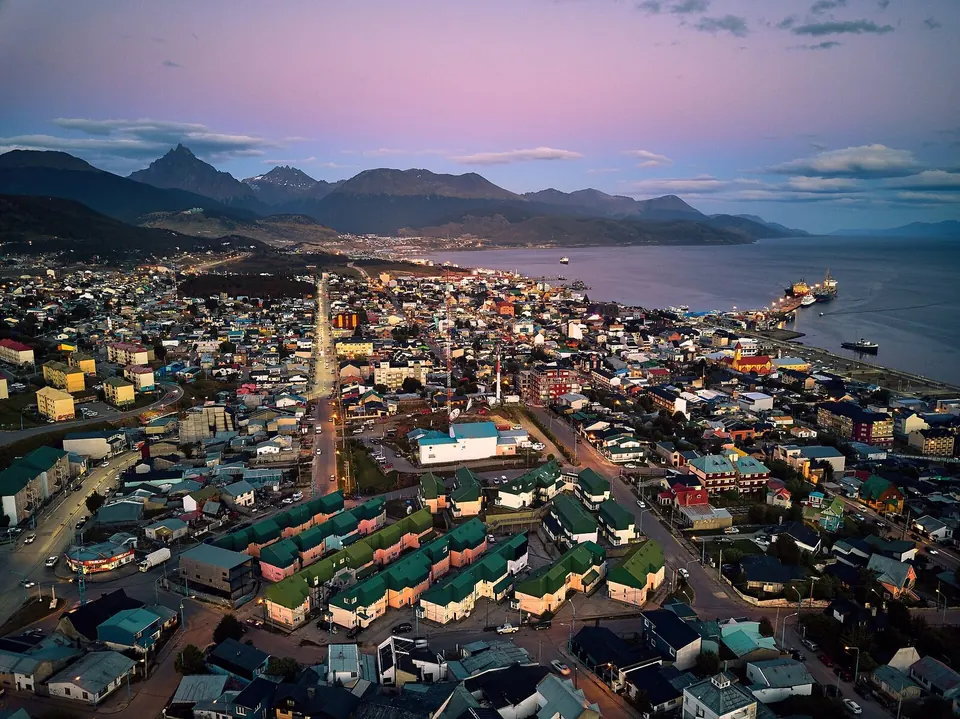
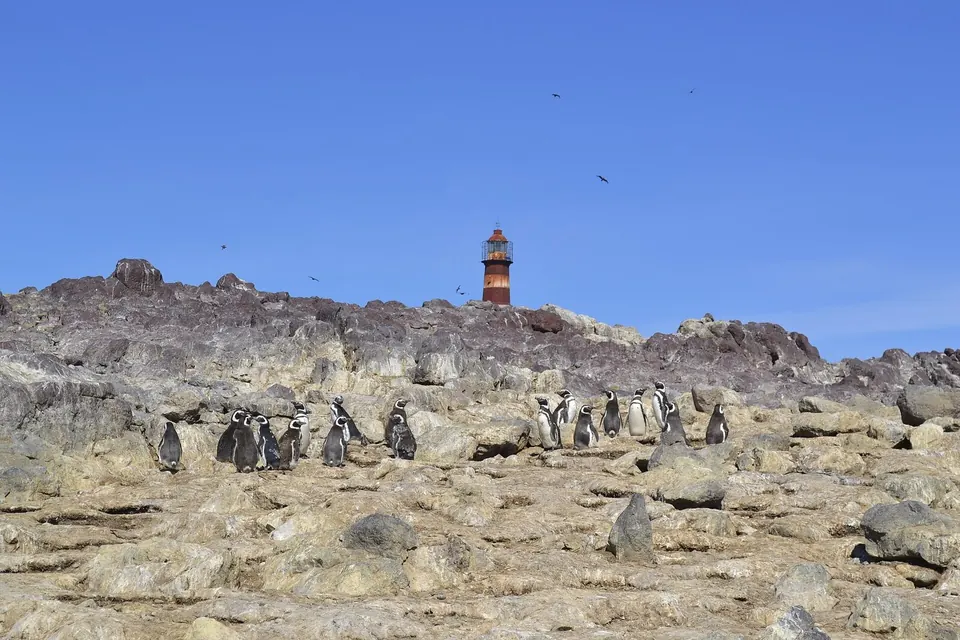
Breakfast. Puerto Deseado is a small fishing town on the north shore of the mouth of the Ría Deseado, an ancient dry riverbed flooded by the Atlantic Ocean that forms an estuary of turquoise waters reaching some 40 to 45 kilometers inland. Founded in 1884, the town traces its history back to 1586, when the English privateer Thomas Cavendish entered the estuary for supplies and named it Port Desire after his flagship. But what undoubtedly brought it worldwide fame was the visit of the naturalist Charles Darwin on the expedition aboard HMS Beagle, which arrived on December 23, 1833. Exploring the estuary, he immortalized it with these words: “I do not think I ever saw a spot which appeared more secluded from the rest of the world, than this rocky crevice in the wide plain.” The area also stands out for its rich marine biodiversity, which has earned it the name “the Galápagos of Patagonia.” That is why we will take the Isla Pingüino Expedition: the island is the only site in Patagonia with rockhopper penguins that is open to tourism. After an hour of sailing in open water, we will land and begin a walk through a maze of rocks among Magellanic penguins and low-flying skuas. On the higher ground, we will see the abandoned lighthouse, the ruins of the old sealing station that operated in the late 18th century, and the spectacular view over the Marine Park. Next, we will observe at very close range the only accessible rockhopper penguin colony on the Patagonian coast. We will go on to a small cove that is home to a South American sea lion haul-out, mostly males, with a chance of spotting an elephant seal among them. We will have a box lunch on the beach and free time, then head back on the lookout for Commerson's dolphins, one of the smallest marine dolphins in the world, as well as Peale's dolphins, albatrosses, and petrels. (This expedition requires good physical mobility, as going ashore on the island and getting back on board can be difficult, and the terrain is rocky.) Arrival in Puerto Deseado and transfer to the selected hotel. Free afternoon, ideal for discovering the history of the town, which, beyond its natural setting, is steeped in the lore of the early explorers and Patagonian pioneers. Railway Station: an imposing stone building from the early 20th century that recalls the golden age of the Patagonian railway. Mario Brozoski Municipal Museum: home to relics recovered from the British corvette Swift, which sank in the estuary in 1770. Historic Railcar (Reserved Car No. 502): a passenger car built in 1898 and used to transport troops during the 1921 strikes. Overnight in Puerto Deseado.
Day 3 · 40 km
Puerto Deseado · Van Noort Safari · Puerto Deseado
Breakfast. Today we will take the Van Noort Safari, which combines nature with the history of the early navigators who visited these shores on their voyages to unknown lands. We will enter the Cañadón del Puerto and continue to Isla del Rey, where the Dutch ship Hoorn caught fire in 1615; it belonged to the Le Maire and Schouten expedition, which went on to discover the Le Maire Strait and legendary Cape Horn. We will sail in search of the friendly Commerson's dolphins to enjoy them up close from our boats. At the Barranca de los Cormoranes, we will see striking red-legged cormorants on their nests, along with other species such as rock shags and dolphin gulls. Farther on, at Isla Larga, we will spot a South American sea lion breeding colony. We will then land on Isla de los Pájaros, home to a colony of more than 30,000 Magellanic penguins, for a short guided walk along the beach to observe the penguins on their nests up close. Finally, on a picturesque beach, we will have our box lunch and then hike with our guide to the summit of Cerro Van Noort. From there we will take in a spectacular panoramic view of the entire Ría Deseado Nature Reserve and the vast Patagonian steppe. Return to Puerto Deseado and accommodation at the selected hotel. Overnight in Puerto Deseado.
Day 4 · 450 km
Puerto Deseado · Perito Moreno
Breakfast. A long day awaits us today. We will travel from the Atlantic Ocean to the Andes, crossing the Patagonian steppe. We will take RN 281, and on our right we will see the remains of the old stations of the Patagonian Railway, which ran from 1914 to 1978 linking Puerto Deseado with Las Heras. We will make a brief stop at Jaramillo Station, a historic landmark tied to the episode known as the Patagonia Rebelde (Rebel Patagonia), where José Font, known as “Facón Grande,” the leader of the rural laborers, was arrested and later executed by firing squad. After the town of Fitz Roy, we will take RP 43, passing through small towns such as Pico Truncado and Koluel Kayke, until we reach Las Heras, where we will stop for lunch (not included). We continue to Perito Moreno, arriving in the afternoon. Accommodation at the selected hotel. Overnight in Perito Moreno.
Day 5 · 450 km
Perito Moreno · Route 41 · Lago Posadas
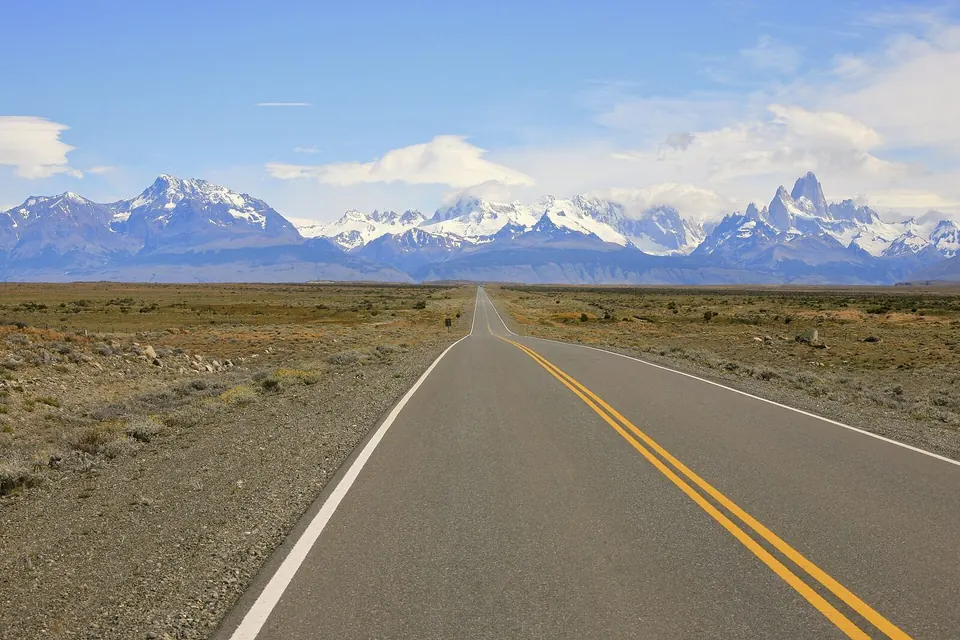
Breakfast. Today we will board 4x4 vehicles to travel Scenic Route 41 to Lakes Posadas and Pueyrredón, moving from the Patagonian steppe into the mountain forest. This is a 100% scenic drive along the most beautiful and surprising scenic route in Santa Cruz Province, with postcard views of the Andes, Cerro San Lorenzo, and the Meseta del Lago Buenos Aires. We will climb from 400 m to 1,500 m above sea level and see the traces of thousands of years of volcanic activity, as well as the erosion left by the last glaciation. After covering 160 km on Route 41, we will reach Estancia Suyai, on the shores of Lago Pueyrredón, almost at the border with Chile. We will have time for a box lunch with a soft drink. We will then continue to the Arco de Piedra (Stone Arch) on Lago Posadas, before finally settling in at the selected hotel. Dinner. Overnight in Lago Posadas.
Day 6 · 260 km
Lago Posadas · Bajo Caracoles · Cueva de las Manos · Perito Moreno
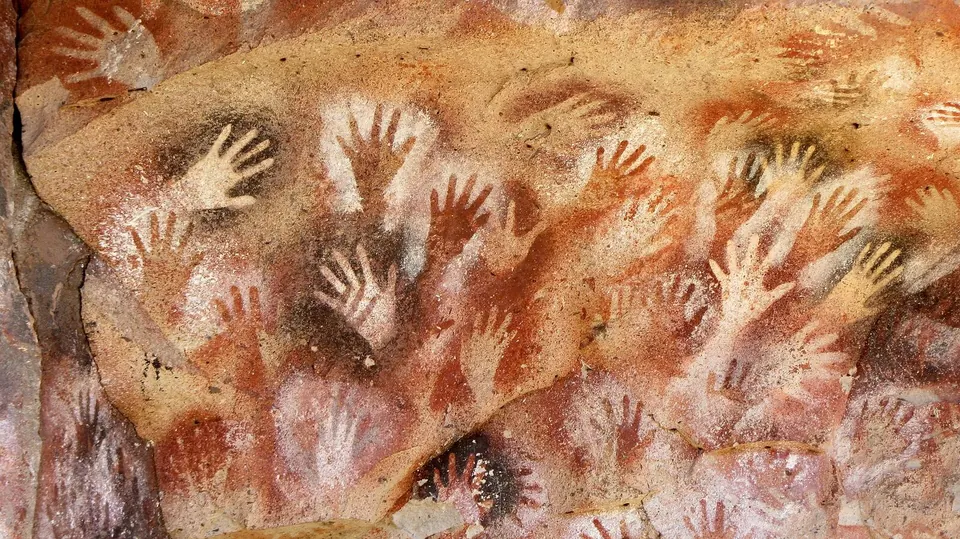
Breakfast. We will head east on the gravel RP 39 and, after 74 km, reach its junction with the legendary Route 40 at the village of Bajo Caracoles. Its standout feature is the stone building of the Hotel Bajo Caracoles, commissioned in 1943 by Francisco José Folch, one of the three founders of the hamlet, and built by the Yugoslav stonemason Mateo Barak. From there, we turn off for about 40 km along a gravel road to the Cueva de las Manos, an archaeological site of worldwide importance and a UNESCO World Heritage Site since 1999. It preserves and protects a complex of archaeological sites occupied intermittently by human groups over a span of 8,000 years. The remains, which include artifacts, landscapes, and rock art, are up to 10,000 years old and stand as key evidence of the life and culture of the ancient peoples of Patagonia. We will take a 90-minute walk among the rock paintings, passing caves, rock shelters, and cliffs. After the visit, we will have time for a box lunch and then continue to the town of Perito Moreno, stopping at scenic viewpoints along the way. Accommodation at the selected hotel. Overnight in Perito Moreno.
Day 7 · 250 km
Perito Moreno · Chile Chico · Cochrane
Breakfast. Departure for the Argentina–Chile border. After a one-hour drive, we will enter the town of Chile Chico via the Jeinimeni border crossing, beginning our journey through Chilean Patagonia. Time to stock up on supplies and exchange currency. We then set off on Route 265, skirting Lago General Carrera toward the Carretera Austral, also known as Route 7. Along the way, we will make a scenic stop at Paso Las Llaves, pass through the village of Puerto Guadal, and stop in Puerto Bertrand for a box lunch. We will continue along the Carretera Austral to the confluence of the Baker and Nef Rivers, an iconic scenic spot in the Aysén Region, located about 12 km south of Puerto Bertrand. It stands out for the striking contrast between the turquoise color of the Baker River and the milky hue of the Nef River, which form a waterfall more than 10 meters high. Time permitting, we will stop at the Baker Pioneers Rural Museum, a restored old house that belonged to Edward Lancaster Soly (known locally as “the Englishman”), manager of Estancia Baker and a key figure in the settlement of the area in the 1920s. In the afternoon, arrival in the town of Cochrane, where we will stay at the selected hotel. Overnight in Cochrane.
Day 8 · 250 km
Cochrane · Caleta Tortel · Cochrane
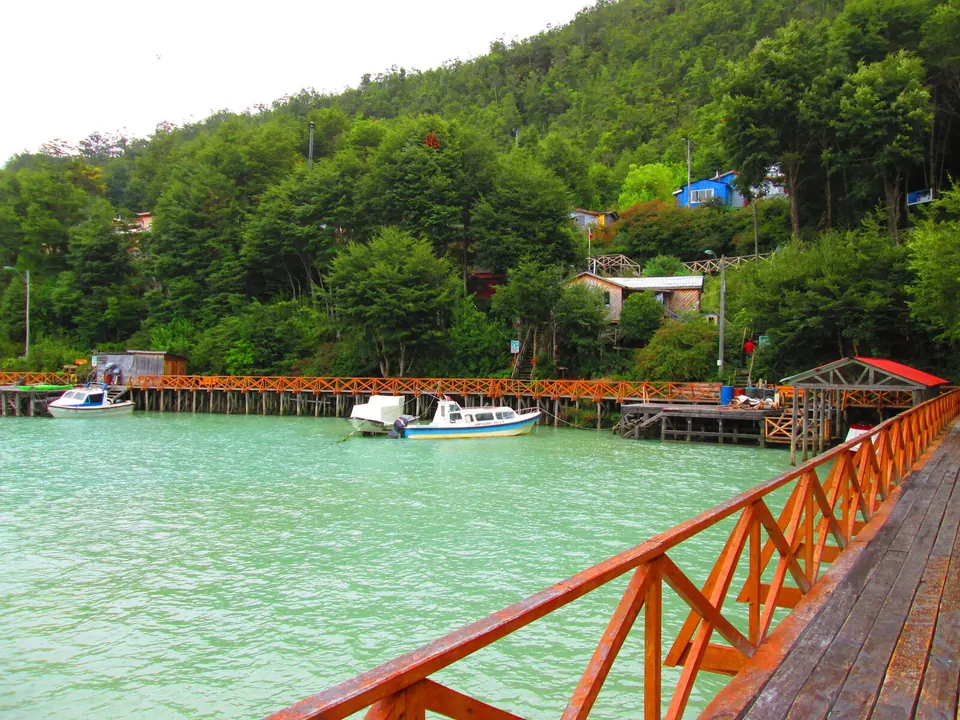
Breakfast. We will head south on the Carretera Austral to Caleta Tortel, arriving after about two and a half hours. It is a unique village and one of the most picturesque in Chile, thanks to its nearly 8 km of Guaitecas cypress boardwalks, right at the mouth of the Baker River, the largest river in Chile by volume, on an inlet of the Baker Channel that connects with the fjords of the Pacific Ocean. Its architecture tells the story of the first “Chilote” settlers, who came from the island of Chiloé, and of their skill at working wood with an ax. The facades of the houses, the wooden shingles (tejuelas), and the distinctive scent of cypress fill the visitor's senses. We will have free time to explore the boardwalks and have lunch at a local restaurant. We will then take a boat trip through the Baker River delta at its mouth to the enigmatic Isla de los Muertos (Island of the Dead). Although the story is not entirely clear, in 1906 some 200 Chilote workers hired by the Compañía Explotadora del Baker were left isolated and without food during the winter; 59 of them died, and some were buried there. Today the island is a National Historic Monument, and 33 unidentified crosses made of Guaitecas cypress remain as silent witnesses to the tragedy. After the boat trip, we will return to Route 7 and head back to Cochrane. Accommodation at the selected hotel. Overnight in Cochrane.
Day 9 · 114 km
Cochrane · Puerto Río Tranquilo
Breakfast. We set off north on the Carretera Austral toward Puerto Río Tranquilo. Arrival shortly before noon and accommodation at the selected hotel. Free time for lunch (not included), and in the afternoon we will take the Marble Caves boat excursion. This outcrop, unique in the region, has been eroded and polished by the waters of Lago General Carrera, which have carved caverns of whimsical shapes. The movement of the water exposed veins of calcium carbonate that, under the pressure and heat of past geological eras, turned into marble. The Full Marble Caves Tour is the most complete boat trip: two and a half hours sailing the turquoise waters of Lago General Carrera to explore the three most spectacular sectors of the sanctuary. From Puerto Río Tranquilo, we first sail to the Marble Chapel sector, where the wind has sculpted the Cathedral, the Chapel, and the Cave over six thousand years. We continue to the Puerto Sánchez caverns, less visited and more spacious, and finish with a visit to the stranded and sunken boats near the shore, remnants of the old lake trade of Patagonia. The excursion takes place in small, open boats, so you may get wet; we recommend wearing suitable clothing and bringing a towel. For weather reasons (wind), the boat trip may be suspended, in which case it can be done the following morning. Accommodation at the selected hotel. Overnight in Puerto Río Tranquilo.
Day 10 · 215 km
Puerto Río Tranquilo · Coyhaique
Breakfast. Afterward, we will continue north along the Carretera Austral, stopping at scenic viewpoints and in Villa Cerro Castillo, a small village of just 600 inhabitants, where we will have free time for lunch (not included). The magnificent Cerro Castillo gives its name to this village in the Ibáñez River valley, whose unique landscapes feature hanging glaciers, lagoons of an intense turquoise color, and beautiful lenga forests, perfect refuges for the huemul (South Andean deer). Finally, in the afternoon, we will arrive in Coyhaique, capital of the Aysén Region, with a population of nearly 60,000. Accommodation at the selected hotel. Overnight in Coyhaique.
Day 11 · 380 km
Coyhaique · Los Antiguos · Perito Moreno
Breakfast. Departure with luggage at 08:00 toward the Argentine border, passing through the town of Balmaceda, which has a small airport that receives flights from Santiago de Chile. After an hour on the road, we will complete immigration formalities at the Huemules Integrated Border Crossing and then, after crossing the Simpson River, enter Argentine territory in Chubut Province. The landscape changes as we return to the Patagonian plateau, and after about 3.5 more hours on the road we will reach Los Antiguos. Known as Chelenco to the Indigenous Tehuelche people, Los Antiguos recovered rapidly, in less than a decade, from the effects of the 1991 eruption of the Hudson Volcano, shifting from sheep farming to growing and exporting the southernmost cherries and berries in the world and becoming today's National Cherry Capital. We will have time for lunch (not included) and to stroll along the waterfront on Lago Buenos Aires, whose mild influence creates the microclimate of the shore where Los Antiguos stands. This great body of water also belongs to Chile, where it is called Lago General Carrera; with a surface area of 2,240 km², more than ten times that of the city of Buenos Aires, it is the second-largest lake in South America after Titicaca. In the late afternoon, we will head to the town of Perito Moreno. Accommodation at the selected hotel. Overnight in Perito Moreno.
Day 12 · 395 km
Perito Moreno · Comodoro Rivadavia · Buenos Aires
Breakfast. Check-out and, at the agreed time, transfer to the city of Comodoro Rivadavia. Arrival at General Mosconi International Airport to board the JetSMART flight to Buenos Aires. Arrival in Buenos Aires. End of services.
Sample itinerary. Included services, hotel category and meals are detailed in the quotation.